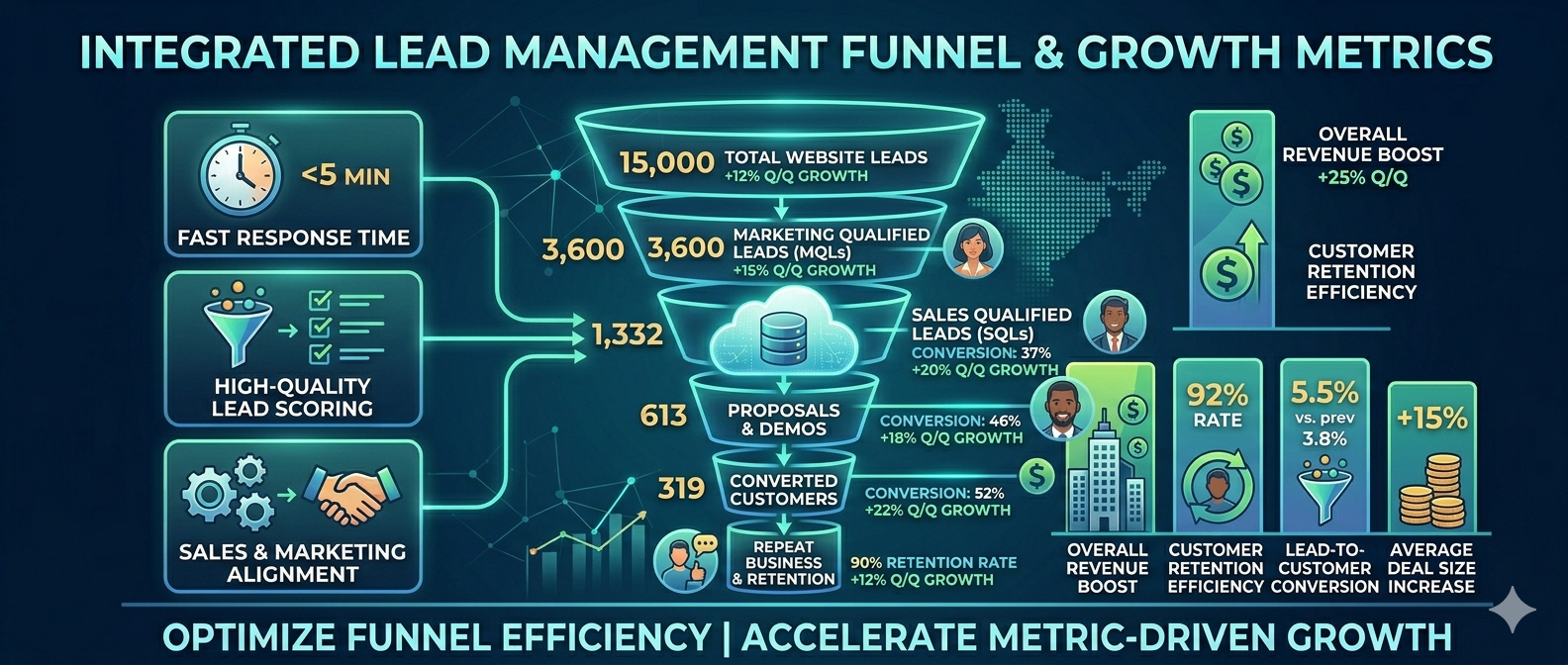
Effective lead management starts with documenting each step of the current process. The best practices for effective lead management include

1. Use Lead Scoring and Qualification Criteria
Lead scoring is a parameter that values leads based on behaviour, such as website visits, email opens, click-through rates, content downloads, form submissions, and interactions with marketing campaigns. This helps your sales time focus on leads with the highest conversion chance by automating prioritisation.

2. Align Marketing and Sales Teams
Enable your teams to create a ‘sales-ready’ qualification. The marketing and sales teams must prioritise any lead that meets the qualification. This is because lead management works best when both teams have shared goals.
3. Leverage High‑Quality Data
Accurate lead data, such as correct emails and validated phone numbers, enhances the impact of your outreach and helps your company meet the data protection standards. Ensure to regularly audit your database to remove duplicates and outdated entries.
4. Prioritise Fast Response Times
Responding to leads within 5 minutes compared to 30 minutes can increase your conversion rate up to 100%. [1] In the case of most businesses, especially startups, the chances of engaging a lead drop rapidly after the initial inquiry. Ensure to respond quickly, often within minutes, to increase the conversion rate, especially in competitive industries.
5. Tailor Outreach Based on Lead Stage
Every lead requires a different marketing and outreach strategy. While in the early stage, you can keep leads engaged with product knowledge; attracting them in the later stage requires personalised demos or pricing discussions. Remember, customising your response according to where the lead is in the sales funnel improves the conversion rate.
6. Nurture Leads at Scale Using Automation
Automation is a vital practice in lead management. Ensure to automate workflows such as scheduled emails and follow‑up reminders based on lead behaviour. This keeps leads engaged without requiring persistent manual effort.
7. Track Everywhere Leads Engage
You can use analytics and CRM tracking to see how leads interact with your emails, website, ads, events, and social media. These insights help you understand their preferences and identify the correct communication timings.
8. Regularly Review and Refine Your Process
Lead management is not a static process; it is a dynamic one. This is why you utilise performance data, like lead conversion rates, total time in pipeline, to improve your qualification criteria and automation regulations.
9. Build Personalised Experiences
Personalising messages based on lead behaviour or profile significantly increases trust. This trust and reliability make your brand different from others while also strengthening your brand reputation.
10. Measure Key Metrics and Forecast
You can also track meaningful KPIs, such as lead response time and lead‑to‑opportunity conversion, for better forecasting. It helps sales leaders plan resources and align goals as per the annual revenue expectations.
Willing to improve your lead conversions without any extra effort? Reach out to LeadBug. We can help you automate follow-ups of tracking leads and maximise your chances of closing each deal efficiently.







Comments
No comments yet.
Leave a Comment